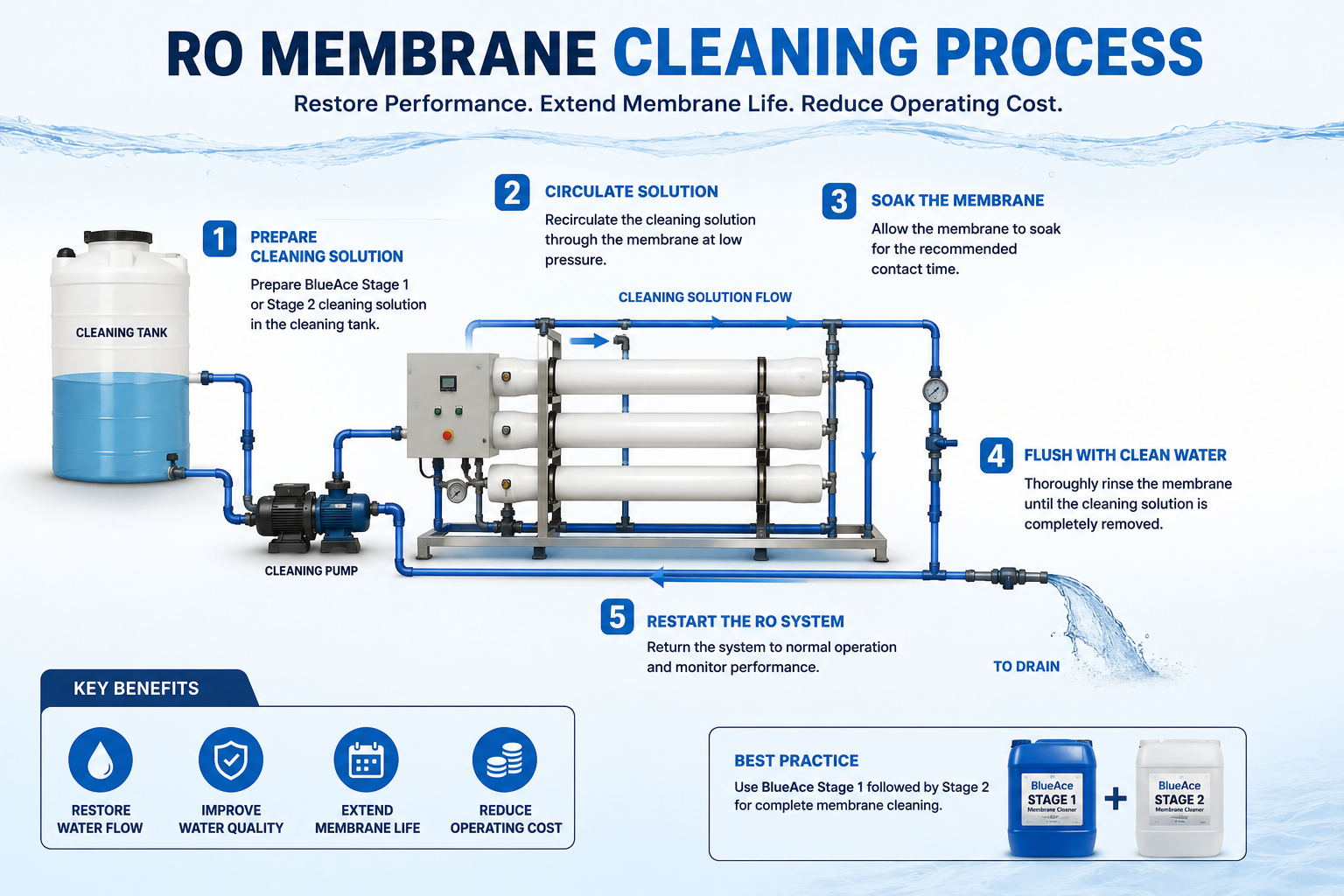
RO Membrane Cleaning Process

Follow the recommended membrane cleaning procedure to restore performance, extend membrane life, and maintain high water production efficiency.

Membrane Cleaning Process
Standard Cleaning Procedure

Proper Membrane Cleaning Matters

Reverse Osmosis membranes gradually accumulate inorganic scale, organic fouling, biofilm, iron deposits, and suspended contaminants. Proper cleaning restores membrane efficiency while extending service life.

Restore Water Flow
Improve Water Quality
Extend Membrane Life
Reduce Operating Cost

Inspect the System

Check feed pressure, permeate flow, rejection rate, and operating conditions.

Prepare Cleaning Solution

Mix BlueAce Stage 1 or Stage 2 according to the recommended dilution ratio.

Circulate Solution

Recirculate the cleaning solution through the membrane at low pressure.

Soak the Membrane

Allow the membrane to soak for the recommended contact time.

Flush with Clean Water

Thoroughly rinse the membrane until the cleaning solution is removed.

Restart the RO System

Return the system to normal operation and monitor performance.

When Should You Clean Your Membrane?

10–15% Drop in Permeate Flow
15% Increase in Differential Pressure
10% Increase in Salt Passage
Preventive Maintenance Schedule

Which Cleaner Should You Use?

Stage 1 Removes Calcium, Iron, Rust, and Mineral Scale
Stage 2 Removes Organic Fouling, Oil, Grease, and Biofilm
Best Practice Use Stage 1 followed by Stage 2 for complete cleaning.

Wear PPE

Use gloves, goggles, and protective clothing.

Use Correct Temperature

Follow the recommended cleaning temperature.

Correct Concentration

Always prepare the solution according to the product guide.

Proper Disposal

Dispose used cleaning solution according to local regulations.

Need Technical Assistance?

Our technical team can recommend the proper cleaning procedure for your membrane system.

Contact BlueAce